How to Register an NGO in India

How to Register an NGO in India | 80G & CSR Funding Eligibility Guide
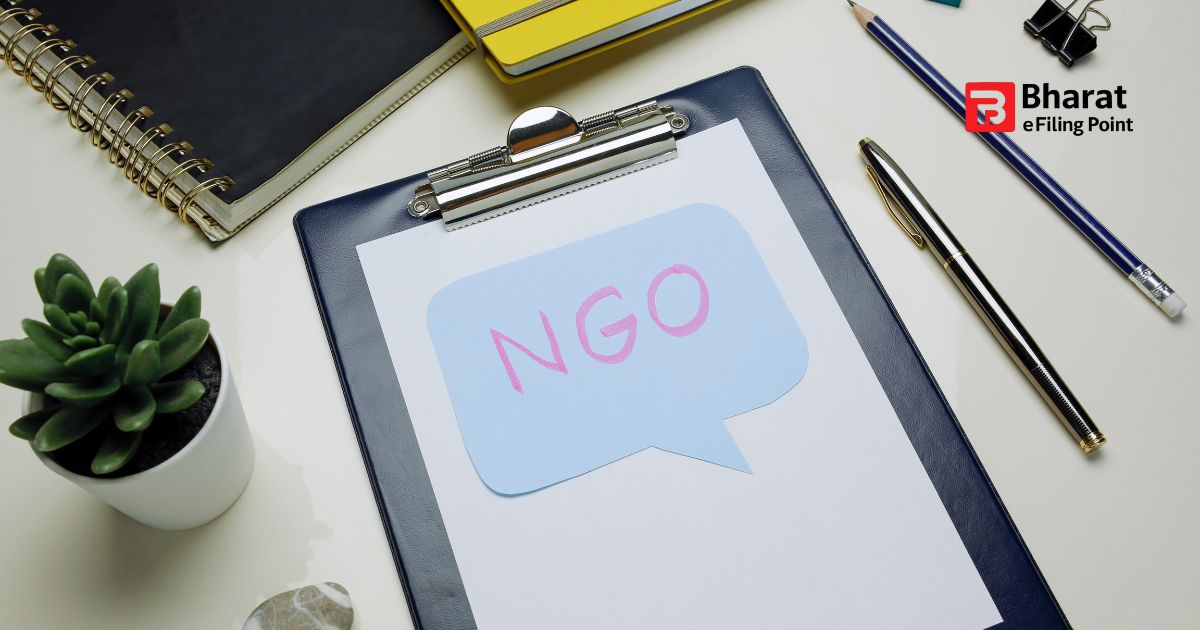
(Non-Governmental Organization) It is a group that works to help people, communities, or the environment without being part of the government and without trying to make a profit. Their goals can include education, health, human rights, poverty relief, disaster aid, or protecting nature. They often get their funding from donations, grants, or volunteers.
There are 3 ways of registration in an NGO.
Trust: There’s a trust in our city that helps underprivileged kids with their education.
Society: A group of locals formed a society to improve cleanliness and education in the neighborhood.
Section 8 Company: She registered her NGO as a Section 8 company because she wanted to work on a national level.
In an NGO, work generally happens through two main sources of support:
1. Public Funding – through 80G and 12A
12A: This allows the NGO to be tax-exempt, meaning it doesn’t have to pay income tax on the donations or grants it receives. Basically, it tells the government, “We’re a genuine non-profit, so don’t tax our income.”
80G: This helps donors, not the NGO directly. If someone donates to an NGO with 80G status, they can claim a tax deduction on that donation. This motivates more people to donate since it saves them money on their taxes.
12A and 80G, an NGO can attract public donations.
2. CSR Funding – from Companies
CSR stands for Corporate Social Responsibility. Under Indian law (Companies Act, Section 135), certain big companies must spend a part of their profit (usually 2%) on social work, like education, health, environment, etc. Instead of doing it themselves, many companies prefer to give that money to NGOs that are already working on such causes.
But to receive CSR funds, an NGO must follow specific rules—for example, it often needs to be registered on the CSR portal, have a track record, and sometimes even be a Section 8 company. CSR funds are usually larger and project-based, while public donations (under 80G/12A) are more flexible and can come from anyone.
80G/12A helps NGOs raise money from the public with tax benefits.
CSR helps NGOs get funding from companies that are legally required to spend on social causes.
The Ajivika mission also comes within the NGO.
Ajivika Mission, officially known as the Deendayal Antyodaya Yojana – National Rural Livelihoods Mission (DAY-NRLM), is a government-backed program launched by the Ministry of Rural Development in India. It aims to reduce rural poverty by helping poor families, especially women, build sustainable livelihoods. In simple terms:
It’s a large-scale mission to support people in villages by giving them the tools, training, and support to earn their own living with dignity, rather than depending on others. If you are an NGO and want to work under or with Ajivika Mission, then registration on the DARPAN portal is usually required.
NGO DARPAN is an official portal run by NITI Aayog (Government of India), where NGOs and voluntary organizations register themselves. It gives them a unique ID, which is often mandatory when applying for government grants, CSR funds, or partnerships with schemes like NRLM (Ajivika Mission).
The model works through community institutions:
Self-Help Groups (SHGs): Small groups (usually 10–15 women) from poor families form an SHG. These groups save money together, give small loans to each other, and learn basic financial skills. SHGs are registered under NRLM with the help of local block-level staff or NGOs working under the mission. Village Organizations (VOs) and Cluster-Level Federations (CLFs): As SHGs grow, they form higher-level bodies to handle larger funds, training, and bigger activities. These bodies also get registered officially, often with NGO or government support.
NGOs, too, can work in partnership with the mission to support SHGs or offer skill-building programs.
Here’s the kind of support and activities done under this mission:
Skill Development & Training: Members get trained in various livelihood skills — like tailoring, poultry farming, goat rearing, handicrafts, organic farming, food processing, etc.
Microfinance Access: SHGs are linked to banks to get low-interest loans.
They also receive a Revolving Fund and Community Investment Fund from the government.
Entrepreneurship Support: Women or SHGs with potential are supported to start small businesses like dairy farms, shops, or even service-based work.
Market Linkages: The mission helps them sell their products through local markets, exhibitions, and online platforms like GeM (Government e-Marketplace).
Social Empowerment: Women become confident, involved in decision-making, and sometimes even lead community-level activities or take part in panchayats.
In a world where challenges are many and resources are often limited, our commitment remains firm to serve with purpose, integrity, and compassion. Every small step we take brings us closer to a society that is more just, inclusive, and empowered. As we continue our journey of creating meaningful change, we invite individuals, partners, and communities to join hands with us because lasting impact is never achieved alone but through collective effort and shared purpose.


